## Radon and Your BC Prefab Cabin — What Every Homeowner Must Know
Radon is an invisible, odourless radioactive gas that seeps from the ground into buildings through cracks, gaps, and foundation openings. It is the **second leading cause of lung cancer** in Canada (after smoking), responsible for approximately 3,200 Canadian deaths annually according to Health Canada. British Columbia has several high-radon zones, and anyone building a new dwelling — including a prefab cabin — should understand the risk and mitigation options.
### What Is Radon and Why Does It Matter?
Radon-222 is a naturally occurring gas produced by the decay of uranium in soil and rock. It accumulates in enclosed spaces, and prolonged exposure at elevated concentrations significantly increases lung cancer risk.
**Health Canada's guideline**: Indoor radon levels should be below **200 Bq/m³** (becquerels per cubic metre). The World Health Organization recommends an even lower threshold of 100 Bq/m³.
**BC's radon reality**: A Health Canada survey found that approximately **9.5% of BC homes** exceed the 200 Bq/m³ guideline. Certain regions — including parts of the Kootenays, Interior, and Okanagan — have significantly higher rates, with some communities reporting 20 – 30% of tested homes above the guideline.
### High-Radon Zones in BC
Based on Health Canada and BC Lung Association data, the following BC regions have elevated radon risk:
**Highest Risk (>15% of homes above guideline)**:
- Castlegar, Trail, and the West Kootenay region
- Nelson and surrounding communities
- Parts of the North Okanagan (Vernon, Lumby)
- Prince George and northern interior communities
- Kamloops and surrounding valleys
**Moderate Risk (8 – 15%)**:
- Kelowna and Central Okanagan
- Revelstoke and Columbia Valley
- Williams Lake and Cariboo region
- Parts of the Fraser Valley (especially foothill areas)
- Cranbrook and East Kootenay
**Lower Risk (but not zero)**:
- Metro Vancouver and Lower Mainland (3 – 6%)
- Vancouver Island coastal communities
- Sunshine Coast
- Squamish and Sea-to-Sky corridor
Even in "lower risk" zones, individual properties can have elevated radon due to local geology. **Testing is the only way to know your actual radon level.**
### How Radon Enters Buildings
Radon seeps into structures through:
- Cracks in foundation walls and slabs
- Gaps around service pipes and utility penetrations
- Construction joints between floor and wall
- Unsealed sump pump openings
- Exposed soil in crawl spaces
The concentration inside a building depends on: (1) how much radon is in the underlying soil, (2) how easily it can enter the building envelope, and (3) the ventilation rate of the structure.
### The Prefab Cabin Advantage for Radon Protection
Factory-built cabins have inherent advantages over site-built construction when it comes to radon mitigation:
**Tighter Building Envelope**: Prefab cabins are assembled in a controlled factory environment with precision-cut materials, consistent sealing, and quality-controlled joints. The resulting building envelope has fewer gaps and cracks than typical site construction — reducing the pathways through which radon can enter.
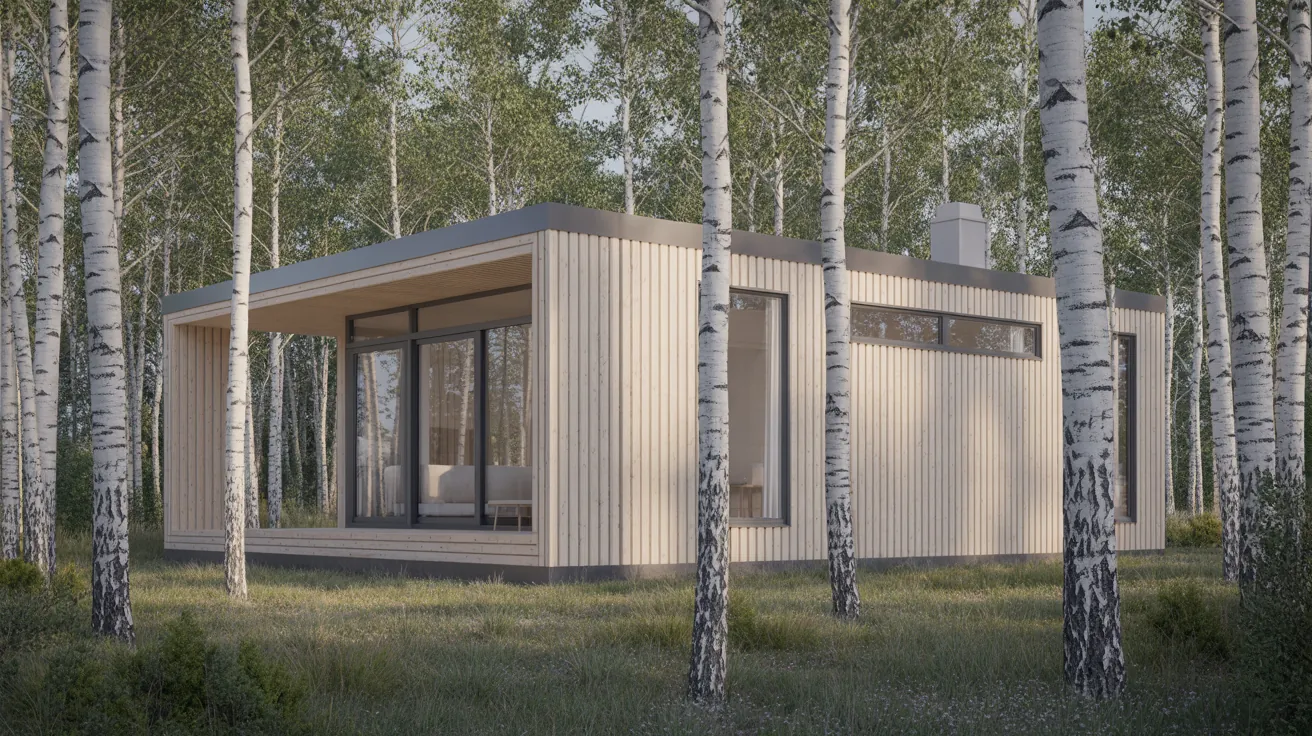
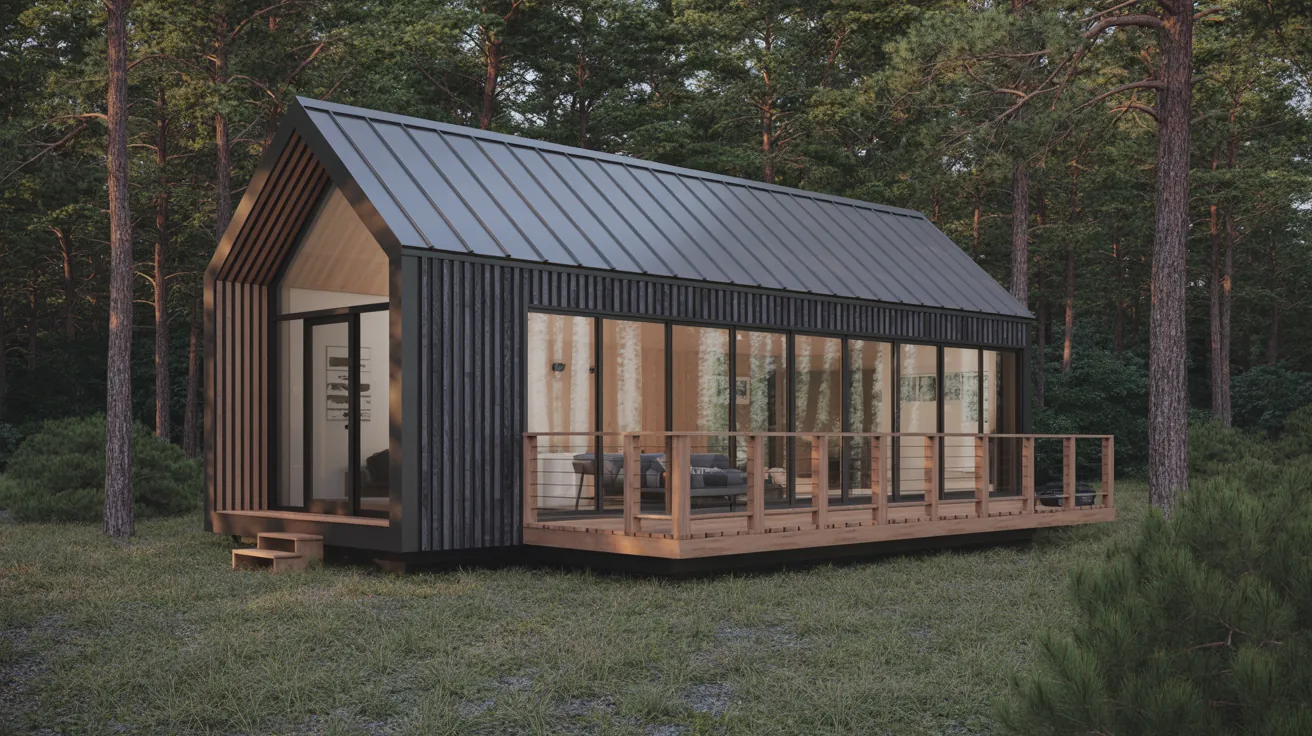
**Elevated Foundations**: Many Avanta Homes cabins are installed on pier or pile foundations that leave an open air space beneath the structure. This natural ventilation beneath the cabin dilutes radon before it can accumulate, significantly reducing indoor concentrations compared to slab-on-grade construction.
**Engineered Vapour Barriers**: Our factory-installed vapour barriers and floor assemblies are continuous and sealed at all penetrations — a level of consistency that is difficult to achieve with field-installed barriers.
**Pre-Designed Mitigation Rough-In**: For properties in known high-radon zones, Avanta Homes can include a radon mitigation rough-in during factory construction. This includes a sealed sub-floor plenum and a capped pipe stub that can be connected to an active depressurization system if post-installation testing reveals elevated levels.
### Radon Mitigation Strategies for Prefab Cabins
**Passive Mitigation (Recommended for All Installations)**
1. **Sub-floor ventilation**: For pier/pile foundations, ensure adequate cross-ventilation beneath the cabin. Building Code requires a minimum of 0.1 m² of ventilation opening per 50 m² of floor area. More is better in high-radon zones.
2. **Sealed floor assembly**: Ensure the cabin's floor vapour barrier is continuous with no tears, gaps, or unsealed penetrations. Factory installation makes this reliable.
3. **Foundation membrane**: For slab foundations, a polyethylene vapour barrier (minimum 6 mil) beneath the slab with sealed seams and edges prevents soil gas infiltration.
4. **Ventilation**: Adequate indoor air exchange dilutes any radon that does enter. Mechanical ventilation (HRV or ERV system) is recommended in all new dwellings and is increasingly required under BC Step Code.
**Active Mitigation (For Confirmed Elevated Levels)**
If post-installation radon testing shows levels above 200 Bq/m³, active mitigation is required:
1. **Sub-slab depressurization (SSD)**: A fan-powered pipe draws air from beneath the foundation slab and vents it above the roofline. This is the most effective mitigation method, typically reducing indoor radon by 80 – 95%. Cost: $1,500 – $3,500 installed.
2. **Sub-membrane depressurization (SMD)**: For crawl-space foundations, a sealed polyethylene membrane is placed over the soil, and a fan draws radon from beneath the membrane to the exterior. Cost: $2,000 – $4,000 installed.
3. **Heat recovery ventilator (HRV)**: Increases indoor air exchange while recovering heat from exhausted air. An HRV alone can reduce radon levels by 25 – 50% and works well as a supplement to SSD or SMD. Cost: $3,000 – $6,000 installed.
### Testing Your Cabin for Radon
**When to test**: Health Canada recommends testing every home, and testing should be conducted after the cabin is occupied and closed up — ideally during the heating season (October through April) when windows are typically closed and radon accumulation is highest.
**Testing methods**:
- **Long-term alpha track detector**: Placed for 91+ days, this provides the most accurate annual average. Cost: $30 – $50 for a mail-in kit from the BC Lung Association or private suppliers.
- **Short-term activated charcoal test**: Provides results in 2 – 7 days but is less accurate for annual averages. Cost: $20 – $40.
- **Continuous radon monitor (CRM)**: Electronic device that provides hour-by-hour readings. Available for rent or purchase. Cost: $150 – $300 to rent, $200 – $800 to buy.
**Recommended approach**: Install a long-term detector during your first heating season in the cabin. If results are above 200 Bq/m³, implement active mitigation. Retest after mitigation to confirm effectiveness.
### BC Building Code Requirements
The 2024 BC Building Code requires radon rough-in provisions for new construction in certain areas. Specifically:
- New buildings in zones identified as having elevated radon potential must include a sub-slab gravel layer and a sealed pipe stub for future active depressurization
- The pipe must extend from the sub-slab gravel through the building envelope to a location where a fan can be added if needed
- This "radon rough-in" adds minimal cost during construction ($200 – $500) but saves thousands if active mitigation is later required
Avanta Homes includes radon rough-in provisions as standard for installations in high-risk zones and as an optional upgrade for all other locations.
### Cost Summary
| Item | Cost Range |
|---|---|
| Radon test kit (long-term) | $30 – $50 |
| Radon rough-in during construction | $200 – $500 |
| Passive mitigation (sealed membrane + ventilation) | $500 – $1,500 |
| Active sub-slab depressurization | $1,500 – $3,500 |
| Active sub-membrane depressurization | $2,000 – $4,000 |
| HRV system (supplementary) | $3,000 – $6,000 |
### The Bottom Line
Radon is a serious but solvable health risk. Prefab cabins offer inherent advantages through tighter construction and elevated foundations. By testing after installation and implementing mitigation if needed, you can ensure your BC prefab cabin has indoor air quality that exceeds Health Canada guidelines. Contact Avanta Homes to discuss radon-aware design options for your property location.
RadonHealthAir QualitySafetyBC Building CodeMitigation
Ready to Start Your Cabin Project?
Explore our 24 prefab cabin models designed for BC conditions.